

Worst case scenario—you somehow lose your dog in Tokyo. Moment of panic! Remembering you’re in Japan. Double panic! Potential language barriers? What to do?
The obvious first step is to look for your dog. But if you aren’t lucky enough to find your dog right away, what happens next? What are the procedures for lost dogs? How can you expand your search?
Stray dogs and cats are sent to shelters as required by the Act on Welfare and Management of Animals.
Getting your lost dog back the easy way—your dog is microchipped
Since 2020 all dogs are now required to be microchipped and registered. Your name and contact information is connected to the microchip number and in a centralized database.
If your dog is found it will be scanned for a microchip and the registered owner will be contacted. Animal welfare centers, police, and registration agencies share information to facilitate the pet’s return.
If a lost dog is taken to an animal hospital, you will be contacted by an animal hospital or a designated registration authority (Japan Veterinary Medical Association).
But if they can’t get a hold of you, the dog will have to be taken to the hokenjo (animal welfare center). They will try again to contact you.
Once you are notified, you will need to pick up your dog within two days.
There will be some paperwork involved and a fee to get your dog back. I haven’t found any information about required documents, but I recommend bringing personal ID and your dog’s city registration.
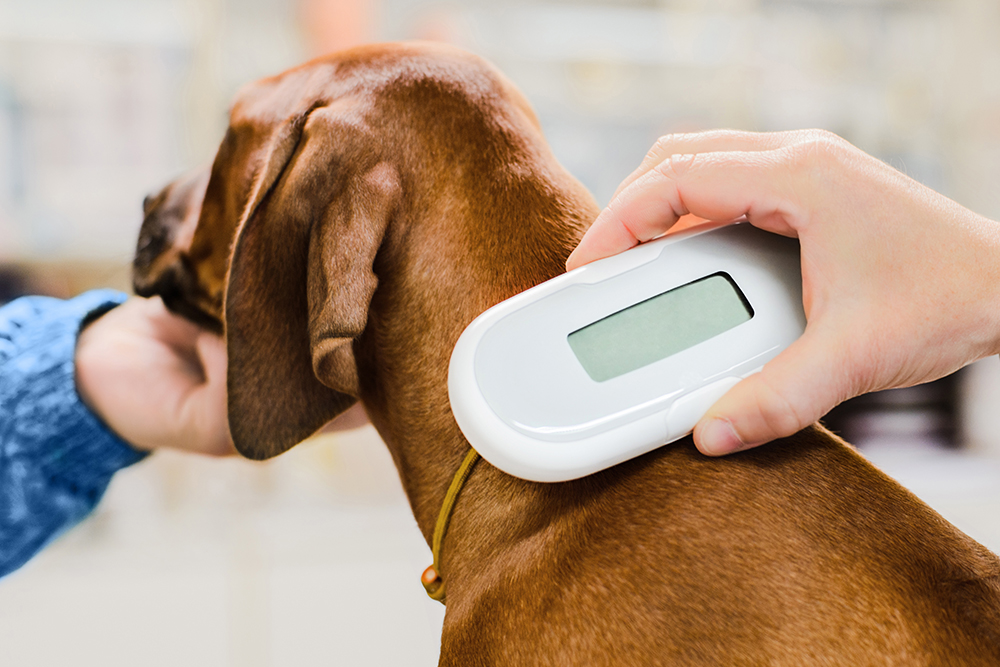
Lost dog and no microchip?
Sometimes dogs still don’t have microchips. Animals born and registered in their city before 2020 aren’t required to have microchips. In this case, your search is more difficult. Hopefully, your dog will still have it’s collar with your contact information. You can read about microchipping your dog in Japan here.
You will have to spend more time checking with the hokenjo (animal welfare office). The hokenjo holds animals for only seven days so make sure are proactive about looking for your dog and contacting them. I’ve included some websites for various prefectures at the bottom of this article.
Keep things simple by putting your information on your dog’s collar
If someone finds a loose dog, they may try to catch it and call you if there is contact information on the dog’s collar. This avoids the need for an RFID reader to get microchip information and a lot of potential paperwork.
Searching the Neighborhood
Check the Koban

Image credit: Deposit Photos
Check with your local police boxes (koban). Sometimes lost dogs and cats are turned in there and they are held for a couple hours until animal control picks them up and takes them to the hokenjo (animal welfare center). You can also alert them about your lost dog and give them contact information in case someone brings your dog there after you leave. Though they probably have an RFID reader and access to the microchip database.
INFORMATION YOU WILL NEED
If you go to the Koban (or make a sign, you will need the following information)
- 名前 (name):
- いなくなった日時、場所(Date, time and place dog got lost):
- 種類 (breed/type):
- 体格 (Body description: weight, size):
- 毛色(hair type and special markings):
- 体の主な特徴。 耳、尾、足の様子など (Main features of the body: ears, tail, legs, etc.):
- 性別: オス・メス 去勢している/去勢していない (Gender: male/female) (spayed/neutered or unspayed/un-neutered)
- 首輪等の色や材質などの特徴 (collar color and style):
- 年齢 (age):
- 連絡先(Your contact info):
Putting Up Signs for Lost Dogs (or other pets)
Posting signs in the neighborhood is a bit tricky since there are ordinances about posting signs on public property. But if you want the sign to stay up, ask a neighbor, vet clinic, or local businesses if you can put up a sign on their property. If you have a house, of course you can put it on your own place. If you live in an apartment, you will need to ask the kanrihin (building manager) if you can put up a notice. You can also ask your local vet if you can put up a sign there.
I have seen signs occasionally for lost cats, lost dogs and one time, a lost bird. So people do post signs. The friend I mentioned previously also noticed that lately, there are less signs. Hopefully due to fewer lost pets. Mostly I’ve seen them posted at the vet, or on a fence of someone’s house.
Log Your Dog’s Life can help

In my book Log Your Dog’s Life, the first few pages are dedicated to your dog’s vital information so that you don’t have to waste time preparing things and can have the information ready in situations like these. This book is in English so I have made a PDF download in Japanese you can find here.
Story time about an escape artist

I was talking to the owner of one of Amelia’s doggie friends about this article and asked if she had any experience with looking for lost dogs. She mentioned that a previous dog (way before microchipping) was quite the escape artist and was always eager for solo adventures. Note: the dog in the photo is a stock photo, not the escape artist.
When they went to search for him, the first stop was the local koban (neighborhood police box). They let the police know that their dog escaped and left their contact information in case the police found him or someone brought him the the koban. She said that the family usually found him first.
She also mentioned that people used to put up signs on light poles about missing pets but that posting signs isn’t that common anymore. We didn’t know why, but we speculate there was too much advertising posted without permission. More about signs later.
Since they had always found their dog before it was taken to the animal shelter, they didn’t have any first hand experience stories about going to the animal shelter.
Some sites to check for lost dogs
Check with your ward’s animal welfare centre. Also check with neighboring areas. It’s easy for an animal to cross into another jurisdiction and be brought to the neighboring jurisdiction’s shelter. In order to ensure a return, if a dog or cat escapes, please make sure that you can get in touch with the public institution.
TOKYO
Tokyo Metropolitan Animal Welfare Consultation Center Lost animal page
Address: 2-9-11 Hachimanyama, Setagaya-ku
Phone: 03-3302-3507 for the 23 wards of Tokyo.
KANAGAWA
Main page by Kanagawa prefecture about finding a lost pet: https://www.pref.kanagawa.jp/osirase/1594/awc/lost
List of hokenjo in Kanagawa prefecture: https://www.pref.kanagawa.jp/docs/ka8/faq/p3678.html
SAITAMA
Saitama hokenjo
https://www.pref.saitama.lg.jp/b0716/doubutu-kaikata-shuuyou-top.html
CHIBA
Chiba’s hokenjo
https://www.pref.chiba.lg.jp/aigo
Chiba government’s page about looking for lost dogs
https://www.pref.chiba.lg.jp/aigo/sagashimasyou.html
Chiba’s list of municipalities and police stations you can check with
Tokyo Dog Life Lingo Quick Bite
- 迷い犬 (まよいいぬ, mayoi inu) – Missing/lost dog
- 犬の捜索 (いぬのそうさく, inu no sōsaku) – “search for a dog.”
- 保健所 (ほけんじょ, hokenjo) – Public health center (often where stray animals are taken)
- 動物保護施設 (どうぶつほごしせつ, dōbutsu hogo shisetsu) – Animal shelter
- 保護犬 (ほごけん, hogo ken) – Rescued or sheltered dog
- 飼い主 (かいぬし, kai nushi) – Pet owner
- 行方不明 (ゆくえふめい, yukue fumei) – Missing or lost (usually when missing due to an accident or disaster not really used for missing dogs)
- 交番 (こうばん, koban) – neighborhood police box/station
- 見つける (みつける, mitsukeru) – To find
- 探す (さがす, sagasu ) – To look for
Culture notes about lost and found in Japan
This isn’t about dogs, some general cultural notes about lost and found in Japan. If you lose something, your odds of getting it back are pretty good (umbrellas tend to be an exception). Most people turn things in and the tracking of lost items is fairly efficient.
This is an interesting read on the whole procedure if your property is turned into a koban (local police box). If someone finds lost property and turns it in, they can request or decline a reward (usually 5-20% of the value of property). Sometimes, people who get their lost items back want to offer a reward anyway and the police may contact you about giving your information. But you don’t have to leave your information if you turn something in and don’t want a reward.
I asked a friend about the situation regarding dogs. And the answer was inconclusive. We thought it was unlikely that people will ask for a reward for finding a dog. But my friend said offering a thank you gift, would probably be very much appreciated. I’ll update if I get ever more insight into this.
If anyone has had experience with this, please leave a comment below.
Proactive wins the day
If your dog’s microchipped, you are most likely to get your dog back quite quickly. One easy way to potentially avoid paper work is to add your personal contact information on your dog’s collar so people can contact you directly. Rewards are common for returning lost items such as phones or wallets. It’s unlikely that someone will request a reward for finding your pet, but giving them a small gift like a cookie gift set would be a thoughtful gesture. But I hope you never need the information in this article and that you and your dog have a safe, enjoyable life in Tokyo.
※References (all in Japanese)
- Return diagram of dogs and cats of unknown owners
- Concept Diagram for the Return of Stray Dogs and Cats by Designated Registration Agencies by the Ministry of the Environment.
- A Q&A page (particularly question 10) about microchipping in Japan written by the Ministry of the Environment
- Tokyo Animal Welfare Consultation Center Home Page
- Chiba Prefecture’s animal care main page
- Chiba Prefecture’s animal care page about looking for lost dogs
Leave a Reply