
Really? An article on poop?

One thing I didn’t expect to spend so much time thinking about when I got a dog was, well, dog poop. It feels like such a strange topic to dwell on, but cleaning up after your dog in Tokyo is an important part of being a responsible pet owner. Back in Canada, it was simple—I’d just scoop it up and toss it in a garbage can or the trash at home without much thought. In Japan, though, cleaning up after your dog is not just good manners; it’s a written rule of dog ownership (as it should be everywhere). But Tokyo takes it to another level with strict garbage regulations and its famous social pressure. And what about the fines if you don’t clean up? Let’s dive in.
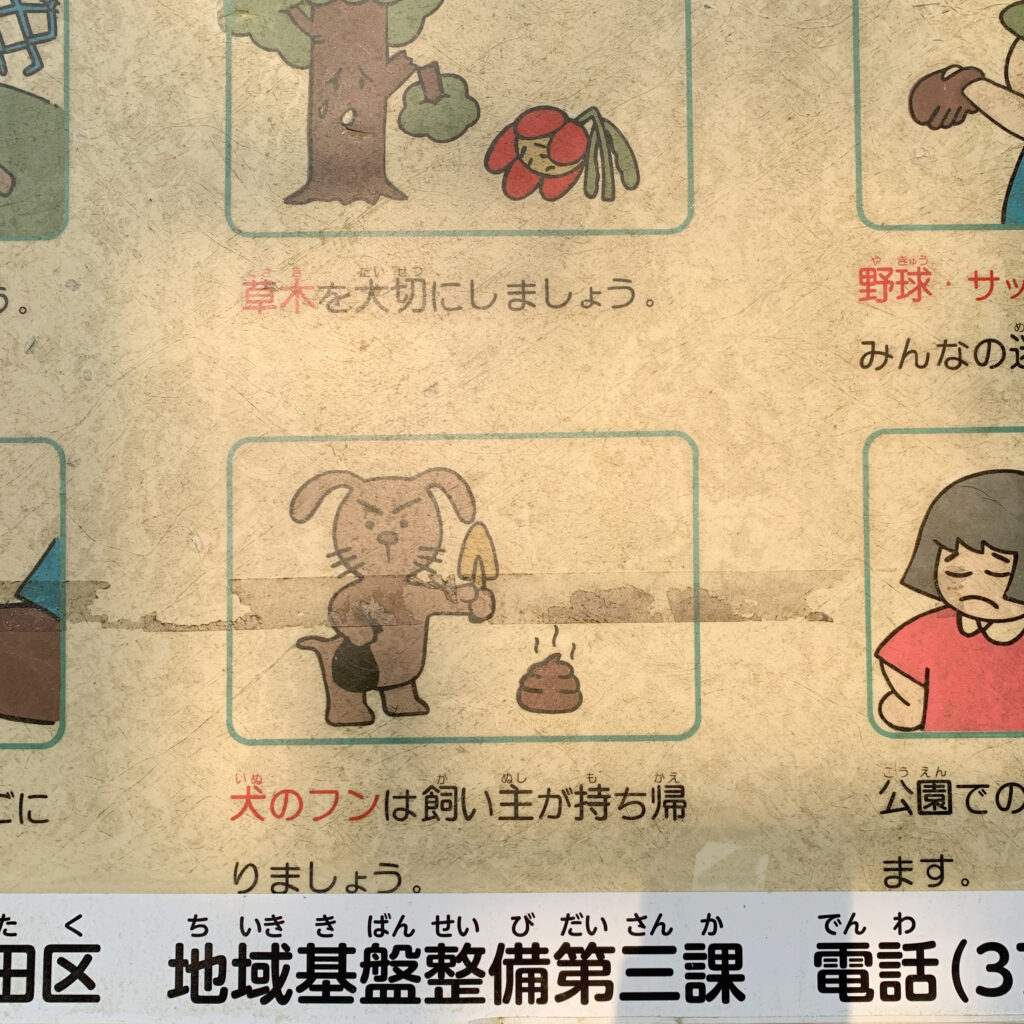
Walkie-poo—cleaning up after your dog
Nothing brings down a day like stepping in doggie doo-doo. Even the biggest dog lovers hate scraping doggie-doo from the bottom of a shoe. Keeping good relationships with neighbors is important anywhere, but I’d say more noticeably so in Japan. There isn’t that much dog waste found on the streets considering the number of dogs. Most people are very diligent about cleaning up after their dog. It doesn’t take long for people to figure out who isn’t picking up after their dog. Maybe no one says anything to you, but people will figure out who you are.
While government websites about dog ownership encourage you to get your dog to relieve itself before going for a walk, you’ll see a lot of dogs taking care of business during walks and people taking care of the business.
Owners are expected to pick up poop and dispose of it at home, not it a public garbage can. As far as I have seen, there aren’t any designated garbage cans for this in dog parks either. One thing about cleaning up after your dog that might be unique to Japan is that you don’t just pick up the poop, you dilute the pee as well.
When your dog pees, you spray the area with water from squeeze bottle to dilute it. Most people also spray the area where their dog pooped to help clean the street and try to prevent dogs from making a mess in front of doors or gates.
Dog Walk Gear
Most dog owners carry a bag with the following walkie essentials—some I’d dare to call the poossentials:
- Water dish (essential for Tokyo summers)
- Doggie waste bags
- Squeeze bottle of water
- Deodorized bag or ziploc or soemthing to put poop in until you get home
Types of Waste bags
Flushable insert type
(a plastic bag with a liner of flushable paper like toilet paper)
Pros:
- easy to pick up and easy to flush the inner contents (plastic outside tossed in combustible garbage),
- often has a bit of deodorizer (though weak)
Cons:
- a little more pricey, bulky
- you can’t flush it if gravel or grass gets caught up in the pickup
Classic plastic
Pros:
- cheap (some dog goods stores give them away with purchases),
- compact
Cons:
- flimsy, can have holes or rip easily,
- poop smell more noticeable
Don’t flush dog poop in public washrooms
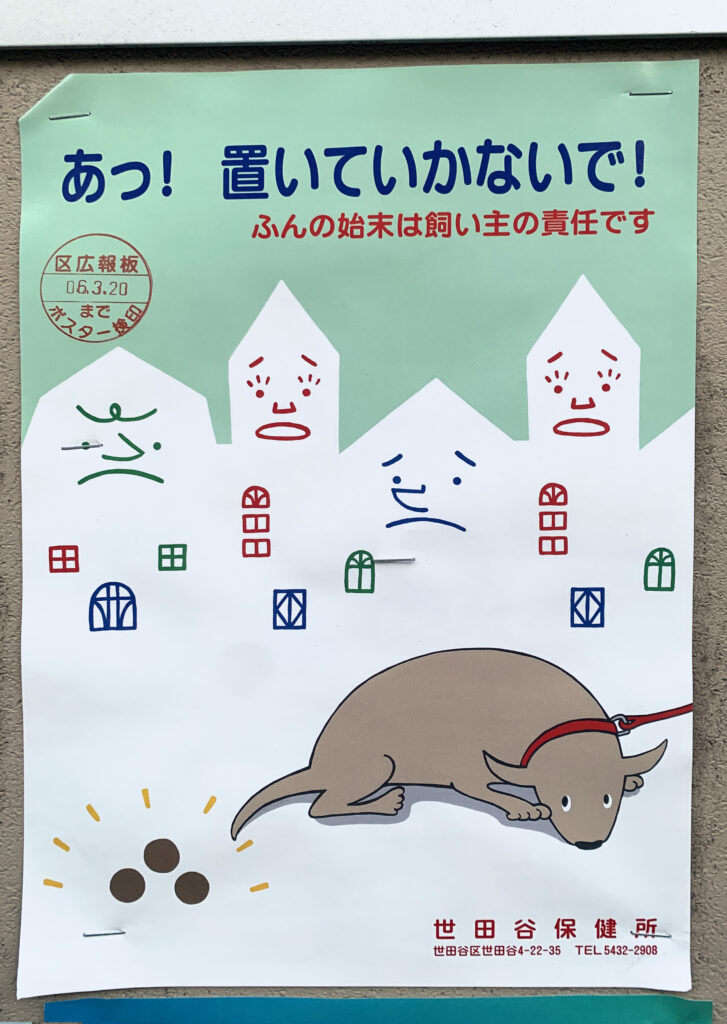
It’s tempting to flush in public or park bathrooms to just get rid of it, but often places will have signs saying not to. But even if they don’t, how “clean” is your pickup? Don’t ruin public washrooms. Take the poop home.
What about the smell?
I’ve found two options to reduce the smell of poo picked up on a walk:
- Place in Ziploc bags with baking soda inside (optional) to reduce the smell.
- Buy a special zippered deodorizing bag to contain waste bags
The deodorizing bag wasn’t as effective at reducing the odor as a Ziploc. I also found the deodorizing bag hard to wash and eventually got really smelly.
Using a Ziploc bag per walk isn’t ideal as far as reducing plastic waste, but I definitely want it if I’m planning to go to a cafe with my pooch.
How to Dispose of Poop at Home
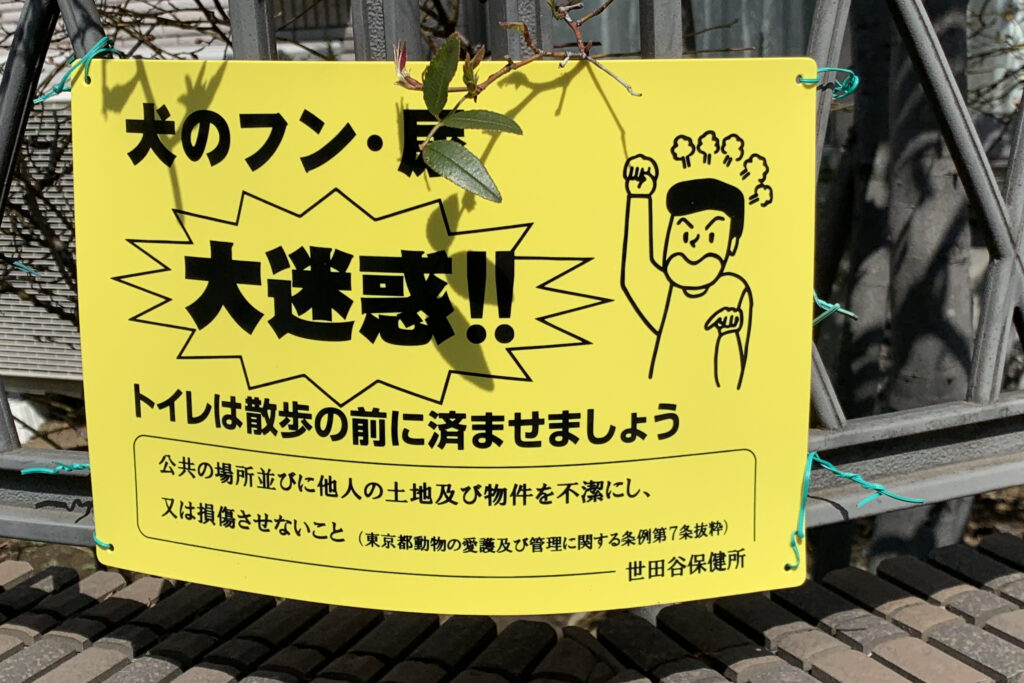
People with lots of experience with living in Tokyo know that garbage days have a lot of rules and probably can skip this section. And usually, garbage is only put out the morning of collection days. But I’ve been in Tokyo for a while, and I realized I needed to organize a bit for disposing of pet waste.
For apartment living, bad weather, puppies or senior dogs, pet-sheets are an amazing convenience. You can buy them online, or pet stores and even supermarkets. Choices at a supermarket are limited, but better than nothing in a pinch.
Ideally, you dispose of pet-waste just like you would for a diaper: flush what comes off, seal it in a bag that won’t reopen. Dispose of it on combustible garbage days. If you live in a house, collection may be in front of your house or put in a communal location. This means just tossing poop in the outdoor garbage when you get home can be tricky—especially in summer when it’s hot.
On top of city requirements, apartment living can pose another challenge to disposing of garbage. Some apartments have rules about where you can store garbage and when it can be put out for collection. The building may have a kanrihin (management staff) that moves garbage from a storeroom to the pickup location on the street. You may have to keep pet waste in your apartment, so treating pet-waste the same way you would for diapers is the way to go. You may want a special bin to keep odors under control.
Story time
One of my friends lives in a pet-friendly apartment that has a special refrigerator in the waste disposal area dedicated to storing pet waste until burnable garbage day. At first I was a little aghast. Then again, this is the room where the garbage is stored. No one is putting food or drinks there. And then I realized it’s brilliant! It’s keeping down the smell, and also keeping it locked away from vermin.
Someday there will be a comic here of this situation with various vermin trying to get inside the fridge saying something witty. But for now, please just let this image live in your head.
More about garbage day
It’s important to double check with your ward office for garbage disposal guidelines. Most ward offices have translated web-pages and PDFs and in a pinch your internet browser may have a translation function. (Side note: One of the best changes for me since I came to Japan is translation for online documents. OMG! You have no idea.) At least in Ota Ward, dispose of dog waste on combustible garbage day (moerugomi / 燃えるごみ). Combustible garbage pickup is usually twice a week, so poop shouldn’t end up sticking around too long.
If you are putting out your own garbage, be sure to use a net or some method to keep crows from opening your garbage and spreading it on the street. If the crows get at your garbage you are expected to clean it up. In my experience, even if it looks like it came from your house, you should probably pick it up.
What happens if I don’t scoop the poop?
Fines?
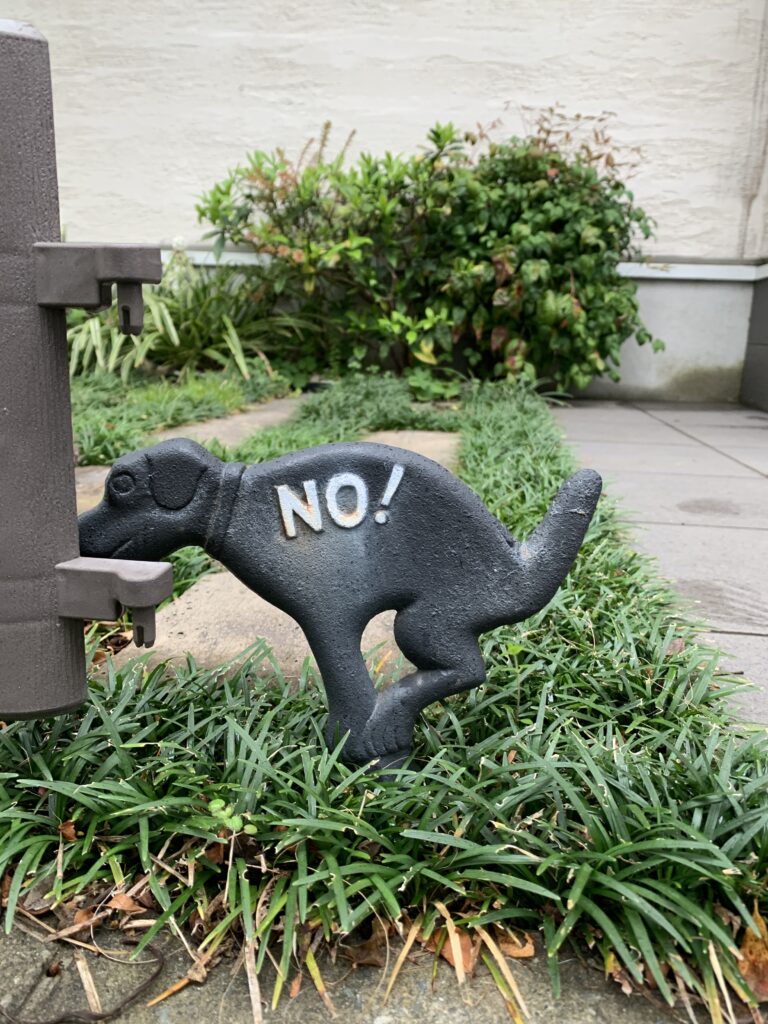
Unlike many places in North America, it’s difficult to find information about the consequences or fines. I went to my local ward office branch where I registered Amelia to ask. The question seemed to catch them off guard. It didn’t help that I didn’t know the Japanese word for a fine. Turns out, it’s 罰金 (bakkin).
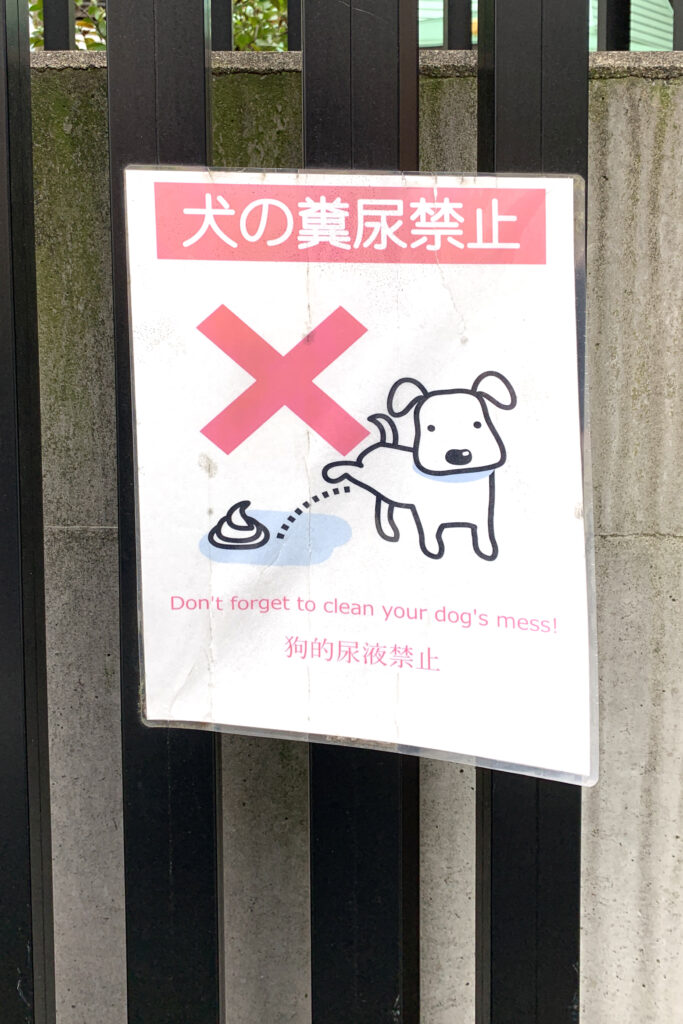
At first, the staff thought I was complaining about the messes of other dogs on my property and were prepared to give me a free sign for dogs not to defecate there.
It’s listed in the requirements of dog owners that you clean up after your pet, but in Ota-ward (and they think the 23 wards of Tokyo) there is no fine. That doesn’t guarantee that other areas of Japan won’t fine a dog owner for not cleaning up.
Social pressure
So it’s probably a cultural thing where it’s just assumed you’re going to do your part because you’re supposed to. But it might also only be a problem if people make complaints about you and your pet.
Sanitation
The biggest reason to clean up after your pet is to reduce the potential to spread bacteria, diseases.
But also to save the shoes! Help keep shoes poo free!
Some day I will make a little comic of this.
Clear on the Scoop on Poop?
Cleaning up after your dog can be an icky task, and while I don’t really consider it a bonding activity with my dog, it’s a great way to monitor your dog’s health. It’s also important for keeping great relations with your neighbors and keeping your community clean. With some organization, you can reduce the inconvenience on yourself and your neighbors.
Tokyo Dog Life Lingo
General:
- 散歩 (Sanpo) – Walk
- 飼い主 (かいぬし, kai nushi) – Pet owner
- トイレ (toire) – Toilet/Restroom
- 罰金 (ばっきん、bakkin) fine
Pee and Urination:
- おしっこ (Oshikko) – Pee (casual)
- 尿 (Nyou) – Urine (formal/medical)
- 排尿 (Hainyou) – Urination
Poo and Feces:
- うんち (Unchi) – Poo (casual, commonly used for pets/kids)
- うんこ (Unko) – Poop (more casual/childish)
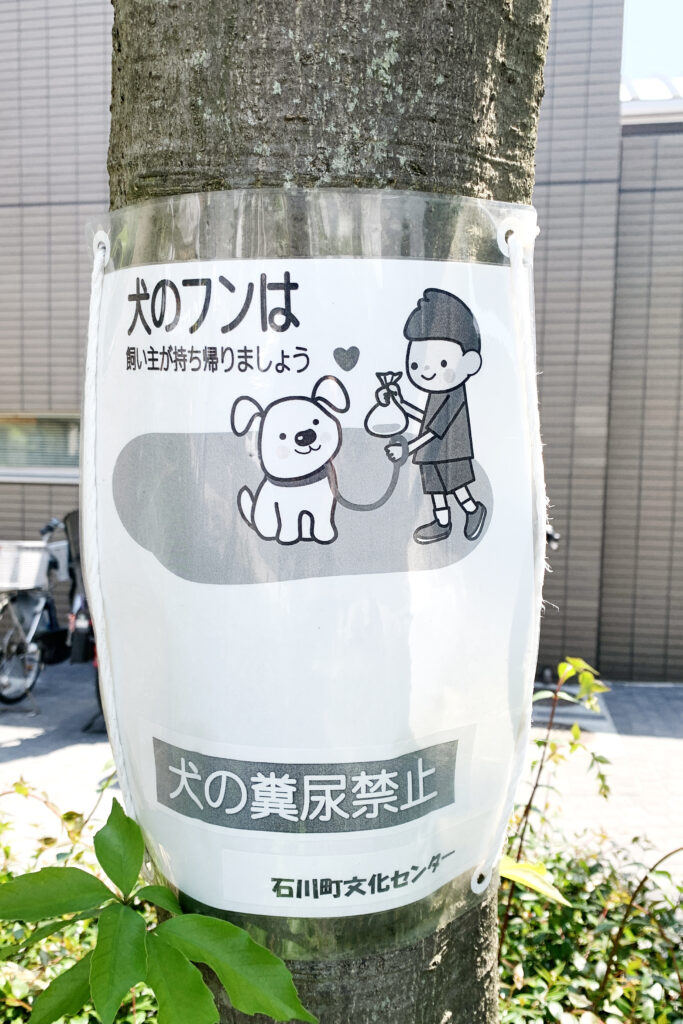
- 糞/ふん (fun – pronounced like fooon) poop (犬のふん -Inu no fun = Dog poop. (used on signs)
- 便 (Ben) – Feces (formal/medical)
- 排便 (Haiben) – Defecation
Cleaning-related terms:
- 片付け (Katazuke) – Cleaning up
- 掃除 (Souji) – Cleaning
- 拾う (Hiro-u) – To pick up
- ゴミ袋 (Gomi Bukuro) – Trash bag
- スコップ (Sukoppu) – Scoop
- 水 (Mizu) – Water
- 持ち帰り (Mochikaeri) – To take home
- 処理 (Shori) – Disposal
- 汚物 (Obutsu) – Waste or filth (general term)
- 排泄物 (Haisetsubutsu) – Excreta (formal term for waste)
Useful phrases for dog owners:
- おしっこの後に水をかけてください (Oshikko no ato ni mizu wo kakete kudasai) – Please pour water after your dog urinates.
- 犬の糞を持ち帰りましょう (Inu no fun wo mochikaerimashou) – Please take your dog’s poop home with you.
- ここで排泄させないでください (Koko de haisetsu sasenaide kudasai) – Please do not let your dog relieve itself here
Useful links:
https://www.city.ota.tokyo.jp/seikatsu/gomi/shigentogomi/kanen.html
Ota Ward garbage disposal explanation (other wards have their own version)
This page lists links for all the Tokyo ward garbage disposal policy:
Free signs from Ota Ward about requesting dogs not leave feces from Ota ward
Pet Tips from the Ministry of the Environment X THE POO DRILL
Some hilarious PDFs to encourage you to think of community hygiene and owning dogs done in the way only Japan can—cute cartoons. And yes, Poo Drill (うんこドリル). The language level is aimed for elementary children, but it’s still cute and fun.
Leave a Reply